 Radio Mickyandoniehn
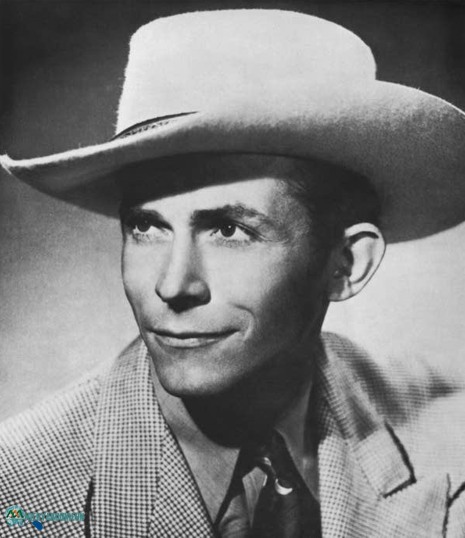
Fecha de Nacimiento: 17 de septiembre de 1923 en Georgia, Alabama, Estados Unidos.
Fecha de Fallecimiento: 1 de enero de 1953 en Oak Hill, Virginia.
Biografía
Aprendió por sí solo a tocar la guitarra cuando era niño y, con doce años, ganó un concurso musical con su canción ‘WPA Blues’.
Hizo amistad con un viejo negro llamado Rufe Payne que le introdujo en los principios de la música: himnos religiosos, ragtime, blues y baladas montañesas.
Poco después creó su propia banda, The Drifting Cowboys (Los vaqueros errantes), compuesta por Shorty Seals al contrabajo, Charlie Mays (apodado El mexicano) con el violín, Boots Harris con la steel guitar y el Indio Joe Hatcher a la guitarra solista (la formación cambiaría con los años).
Fue uno de los primeros cantantes country cuyas composiciones eran aceptadas de inmediato por los cantantes de la época y su obra sigue siendo famosa mucho tiempo después de su muerte. Entre las más de 100 canciones que compuso cabe destacar ‘Lovesick Blues’, ‘I’ll Never Get Out of This World Alive’, ‘Your Cheatin’ Heart’, ‘Long-Gone Lonesome Blues’ y ‘Jambalaya’.
Su adicción a la bebida hizo aumentar los conciertos que se anulaban por su estado de embriaguez. Completamente arruinado se alejó de la música profesional y realizó trabajos como de soldador de un astillero.
Hank Williams falleció en Oak Hill, Virginia, el 1 de enero de 1953 a causa del alcohol y de otras drogas.
Biography in English
Date of Birth: September 17, 1923 in Georgia, Alabama, United States.
Date of Death: January 1, 1953 in Oak Hill, Virginia.
Biography
He taught himself to play the guitar as a child and, at the age of twelve, won a music competition with his song ‘WPA Blues’.
He befriended an old Negro named Rufe Payne who introduced him to the beginnings of music: hymns, ragtime, blues, and mountain ballads.
Shortly after, he created his own band, The Drifting Cowboys, made up of Shorty Seals on double bass, Charlie Mays (nicknamed El Mexicano) on violin, Boots Harris on steel guitar and Indio Joe Hatcher on lead guitar ( the training would change over the years).
He was one of the first country singers whose compositions were immediately accepted by the singers of the day and his work remains famous long after his death. Among the more than 100 songs he composed are ‘Lovesick Blues’, ‘I’ll Never Get Out of This World Alive’, ‘Your Cheatin’ Heart’, ‘Long-Gone Lonesome Blues’ and ‘Jambalaya’.
His addiction to drinking increased the number of concerts that were canceled due to his state of intoxication. Completely ruined, he moved away from professional music and worked as a shipyard welder.
Hank Williams died in Oak Hill, Virginia, on January 1, 1953 from alcohol and other drugs.
Discografía
• “Never Again (Will I Knock on Your Door)” / (Sterling Records, 1946).
• “Wealth Won’t Save Your Soul” / “When God Comes and Gathers His Jewels” (1946).
• “My Love for You (Has Turned to Hate)” / “I Don’t Care (If Tomorrow Never Comes)” (1946).
• “Pan American” / “Honky Tonkin'” (1946).
• “Move It On Over” / “I Heard You Crying in Your Sleep” (MGM Records, 1946). #4.
• “On the Banks of the Old Pontchartrain” / “Fly Trouble” (1946).
• “My Sweet Love Ain’t Around” / “Rootie Tootie” (1947).
• “Honky Tonkin'” / “I’ll Be a Bachelor ‘Til I Die” (Sterling Records, 1947). #14.
• “I’m a Long Gone Daddy” / “The Blues Come Around” (1947). #6.
• “I Saw the Light” / “Six More Miles (To the Graveyard)” (1947).
• “A Mansion on the Hill” / “I Can’t Get You Off of My Mind” (1947).
• “Lovesick Blues” / “Never Again (Will I Knock on Your Door)” (1948). #1. La cara B llegó al #6.
• “Wedding Bells” / “I’ve Just Told Mama Goodbye” (1948). #6.
• “Mind Your Own Business” / “There’ll Be No Teardrops Tonight” (1948). #5.
• “You’re Gonna Change (Or I’m Gonna Leave)” / “Lost Highway” (1948). #4.
• “I’m So Lonesome I Could Cry” / “My Bucket’s Got a Hole In It” (1948). #1. La cara B llegó al #2. Se reeditó en 1965, alcanzando el #43.
• “I Just Don’t Like This Kind of Living” / “May You Never Be Alone” (1949). #5.
• “Long Gone Lonesome Blues” / “My Son Calls Another Man Daddy” (1949). #1. La cara B llegó al #9.
• “Why Don’t You Love Me?” / “A House Without Love” (1949). #1. Se reeditó en 1975, alcanzando el #61.
• “Why Should We Try Anymore?” / “They’ll Never Take Her Love from Me” (1949). #9. La cara B llegó al #4.
• “Moanin’ the Blues” / “Nobody’s Lonesome for Me” (1949). #1. La cara B llegó al #9.
• “Cold, Cold Heart” / “Dear John” (1950). La cara B llegó al #6.
• “I Can’t Help It (If I’m Still in Love with You)” / “Howlin’ at the Moon” (1950). #2. La cara B llegó al #3.
• “Hey Good Lookin'” / “My Heart Would Know” (1950). #1.
• “(I Heard That) Lonesome Whistle” / “Crazy Heart” (1950). #9. La cara B llegó al #2.
• “Baby, We’re Really in Love” / “I’d Still Want You” (1950). #4.
• “Honky Tonk Blues” / “I’m Sorry for You, My Friend” (1951). #2.
• “Half as Much” / “Let’s Turn Back the Years” (1951). #2.
• “Jambalaya (On the Bayou)” / “Window Shopping” (1951). #1.
• “Settin’ the Woods on Fire” / “You Win Again” (1952). #3. La cara B llegó al #7.
• “I’ll Never Get Out of This World Alive” / “I Could Never Be Ashamed of You” (1952). #3.
• “Kaw-Liga” / “Your Cheatin’ Heart” (1952). #1. La cara B llegó al #1.
• “I Won’t Be Home No More” / “Take These Chains from My Heart” (1952). #4. La cara B llegó al #1.
• “Weary Blues from Waitin'” (1952). #7. Sin cara B.
• “Please Don’t Let Me Love You” (1953. #9. Sin cara B.
• “There’s a Tear in My Beer” (1989). Grabación con Hank Williams Jr. #7.
About radio-mickyandonie

Check Also

Victor Lidio Jara Martínez
Fecha de Nacimiento: 28 Septiembre 1932 Fecha de Fallecimiento: 16 Septiembre 1973 (40 …